
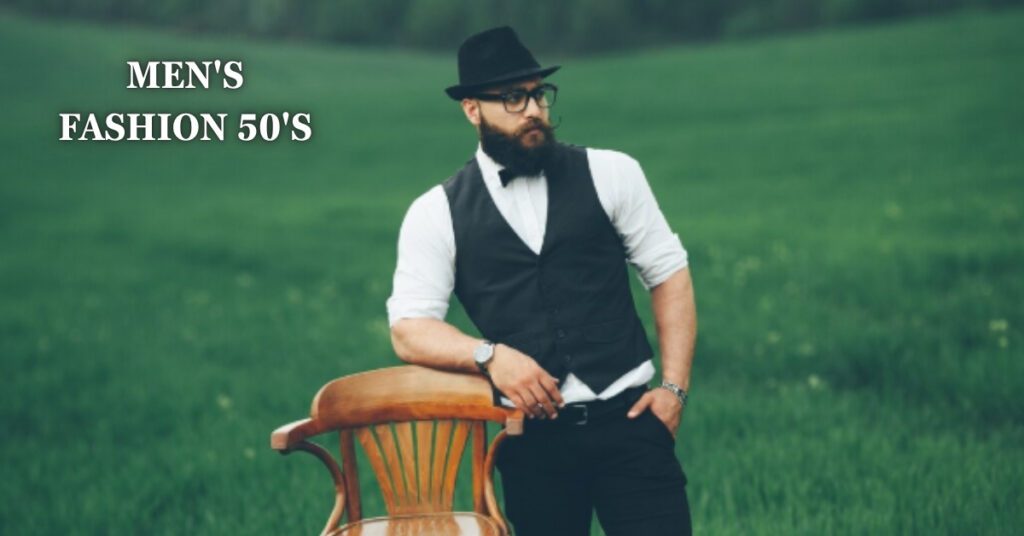
Men’s fashion 50’s built its reputation on two things happening at once, sharply tailored suits on one side and the sudden rise of casual, rebellious style on the other. That contrast is exactly what still makes the decade worth borrowing from today, whether you gravitate toward the buttoned-up gentleman look or the leather jacket and denim rebel style. This guide breaks down what men actually wore in the 1950s, which pieces translate into a modern wardrobe without reading as costume, and how to build a handful of outfits you can genuinely rewear instead of pulling together for one themed party. By the end, you will know exactly which silhouette to buy and how to wear it.
Short Answer
Tailored suits and sport coats sit on one end of men’s fashion 50’s, and the leather jacket, white tee, and denim rebel look sit on the other, tied together by cuffed trousers, camp collar shirts, and bold color. Today it works best borrowed one signature piece at a time.
What Actually Shaped Men’s Fashion in the 1950s
Fabric prices dropped sharply after the war, and that single economic shift did more to change how men dressed than any single trend. Suddenly a working man could own more than one or two outfits, which meant casualwear stopped being a rare occasion and became a genuine category of its own. Hollywood pushed the shift further along, with James Dean, Marlon Brando, and Frank Sinatra putting leather jackets, plain white undershirts, and denim in front of an audience that had only ever seen suits on screen. Historians of the period describe this as a genuine split, with elegant tailoring traditions running alongside an entirely new mode of dress pushed forward by working-class youth and rock and roll culture, a divide covered in more depth in Wikipedia’s overview of 1950s Western fashion if you want the full historical picture.
Formal dressing did not disappear, though. Suits stayed conservative through most of the decade, usually gray, navy, or charcoal flannel, cut in the American sack style with a straight, boxy line and very little waist suppression. Lapels ran narrow, shoulders carried less padding than they had in the 1940s, and trousers were cuffed with two pleats and a noticeably fuller leg, often close to nine and a half inches wide at the hem. That silhouette is the one most people picture when they hear the phrase 1950s fashion for men, and it holds up well today when the fabric and proportions are updated slightly.
There is a third lane that most guides skip entirely, and it happens to be the most wearable one now. College style through the back half of the decade settled into what eventually became known as Ivy or trad dressing, built around oxford cloth button-down shirts, chino trousers, penny loafers, and lightweight cardigans. It never carried the drama of a leather jacket or the formality of a suit, and that is exactly why it ages so well. A modern reader who wants one piece of 1950s style without any theatrical effort should start here, not with the suit or the motorcycle jacket everyone else recommends.
Three 1950s Looks Still Worth Wearing
Each of these pulls from a real thread of the decade rather than a generic idea of vintage style, and each one holds together as an outfit you could wear this week. None of them require hunting down an actual vintage garment or shopping a costume rental site, since every piece described below is sold new by mainstream menswear retailers right now. Pick the one that matches an occasion already on your calendar rather than trying to collect all three at once.
The Ivy Campus Look
Start with an oxford cloth button-down shirt in white or pale blue, a pair of flat-front or lightly pleated chinos in khaki or stone, and penny loafers in a warm brown leather. A lambs wool cardigan in navy or oatmeal covers the transition months. The rise sits at the natural waist rather than low, and the chino leg runs straight through the thigh with a slight taper at the ankle instead of the skinny cut most stores default to now. Oxford shirts from most mid-range retailers run somewhere in the seventy to one hundred dollar range, and a well-made cardigan in that same tier will outlast a cheaper one by several winters.
The Tailored Gentleman
This look leans on an odd jacket rather than a full suit, ideally a mid-weight flannel or tweed sport coat in gray or brown, paired with charcoal wool trousers and a knit tie. Chukka boots in suede replace the dress oxford here, which keeps the whole outfit from tipping into full business formality. Keep the jacket’s shoulder soft and natural rather than heavily structured, since those closer mirrors the American cut of the era than the sharper European tailoring sold under similar names today.
The Rebel in Leather and Denim
A moto-style leather jacket, a plain white crew neck tee, and straight-leg dark denim make up the core of this one, finished with leather boots or a pair of low-profile white sneakers if boots feel like too much. Fit matters more here than in the other two looks. The jacket should sit close through the shoulder and chest without pulling across the back, and the jeans should hit a true straight leg rather than anything slim or tapered, since the original silhouette was cut for movement, not for showing off a leg line.
The Colors and Details That Actually Signal the Decade
Hats carried real weight in the 1950s, and the fedora is the one most people picture first, though summer brought out straw boaters and Panama hats just as often. A flat cap showed up in more casual settings and stayed close to the head rather than the taller crown of a dress fedora. Wearing any of these today is the fastest way to signal the era, and it is also the fastest way to look like you are in costume if nothing else about the outfit is deliberate. A better move for most readers is skipping the hat entirely and letting a patterned knit tie or a woven leather belt carry that same period signal instead.
Color did more work than most modern guides give it credit for. Ties came in bold geometric prints and medallion patterns through the middle of the decade, shirts leaned pastel by the late fifties after a bolder start, and even something as small as a hatband or a sock might carry a contrasting color just to show a bit of personality. None of that needs to be loud today. A single pastel shirt worn under the tailored gentleman jacket, or one patterned tie against an otherwise plain outfit, reads as a nod to the decade without turning the whole look into a reenactment.
The Fifties Mistake That Turns an Outfit Into a Costume
The most common error is trying to wear all three looks at once, layering a fedora, wide tie, pleated trousers, and saddle shoes into a single outfit because that combination shows up together in old photographs. Photographs from any decade compress years of variation into a single frozen image, so what looks like one cohesive outfit was often pieced together from wildly different contexts, occasions, and even different points within the same decade. Most guides skip past this and hand readers a shopping list instead of an explanation, which is exactly how a reader ends up buying five period pieces and wearing none of them past the first outing.
Real men in the 1950s did not dress that way for an ordinary Tuesday. A businessman wore his suit to the office and changed into a cardigan or leisure jacket at home. A teenager wore denim and a leather jacket on weekends and something entirely different for a school dance. The correct approach for anyone borrowing from this era now is to pick one strong signature piece, a camp collar shirt, a pair of cuffed trousers, a moto jacket, and let the rest of the outfit stay contemporary. One period detail reads as intentional style. Four or five of them read as a party costume.
Turning It Into a Wardrobe You Will Actually Rewear
Most of the pieces across these three looks already overlap more than they first appear to. Straight-leg denim works equally well under a leather jacket for the rebel look or under a cardigan for something closer to Ivy casual. A camp collar shirt bridges the gap between the gentleman look worn open-necked without a tie and a simpler warm-weather rebel outfit. Penny loafers move comfortably between the Ivy look and the tailored gentleman look without needing a second pair of shoes, which brings the total piece count for all three looks down to around ten items rather than the eighteen or twenty a literal reading of each list would suggest.
That kind of overlap is worth building around rather than buying three unrelated capsules that only work with themselves. If a small, deliberately overlapping wardrobe sounds like the right way to approach this, the same idea sits behind building a twelve piece capsule around one season, where a handful of well-chosen pieces recombine into far more outfits than the piece count suggests. The same logic that applies to a modern capsule wardrobe applies just as well to pulling 1950s style into regular rotation instead of a costume box.
Season changes what gets emphasized more than it changes the pieces themselves. Summer months lean on the short-sleeve camp collar shirt and lighter chinos from the Ivy look, since the wool trousers and cardigans that anchor the gentleman look start to feel heavy once the weather turns warm. Winter flips that balance toward the sport coat, the leather jacket over a heavier sweater, and boots instead of loafers. Building the wardrobe with that rotation in mind from the start means fewer pieces sit unused for half the year.
Fit Notes for Different Builds
Trousers from the era ran higher through the rise and fuller through the thigh than almost anything sold as mainstream fit today, so chasing an exact vintage cut usually means shopping in dedicated reproduction lines rather than a standard department store rack. A relaxed or classic-fit trouser from a mainstream retailer gets close enough for everyday wear without the fitting headaches of a genuine repro pattern. Most readers do better buying that modern approximation and having it tailored at the waist than ordering a true vintage pattern sight unseen.
Broader shoulders and a fuller chest generally look better in the American sack cut described earlier, since its straighter line and lighter shoulder padding does not fight against natural width the way a heavily structured European jacket can. Leaner builds have more room to play with the slimmer, later-decade Roman or Continental cut that came out of Italian tailoring toward the end of the 1950s, since there is less bulk to manage in the first place.
Both build needs to force a fit that was designed around a different frame entirely, and both versions of the era’s tailoring are still made today under one name or another. Dressing for your actual build rather than a photograph does more for how an outfit reads than any single vintage detail could, which lines up with the broader idea that practical, honest fashion content should help you get more out of what you already own rather than chase a fit built for someone else’s frame.
Where to Start This Week
Pick one look from the three above, buy or pull together its two or three defining pieces, and wear them with everything else already in your closet before adding anything more. The Ivy campus shirt and loafers combination is the easiest entry point for most wardrobes, since both pieces already earn their place without any vintage framing at all. Add a second signature piece only once the first one has proven itself in real rotation, not on a mood board.
Conclusion
The easiest way into 1950s style is picking one piece with real presence, a camp collar shirt, a moto jacket, or a pair of penny loafers, and building an otherwise ordinary outfit around it. That single choice does more for the look than a full period wardrobe ever could, and it means every piece you add earns a permanent spot in rotation instead of sitting in a drawer waiting for a themed party. Start with the shirt or the loafers this week and let the rest follow from there.